Passport
Jan 5, 2026 | By: Charlie Yaeger
Bemidji State Football Player Ketola Discovers Virus That Could Combat Tuberculosis
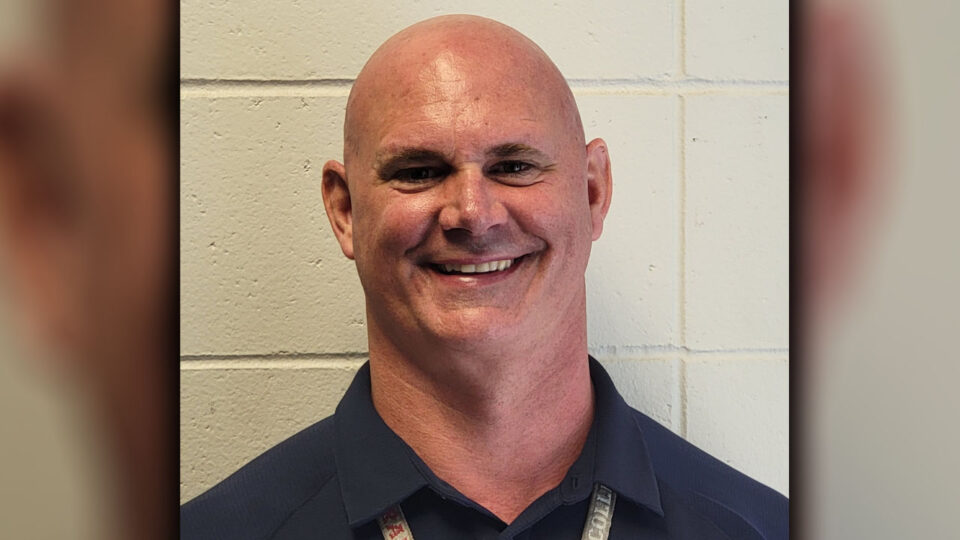
There’s always that one kid growing up that everyone says, “They’re going to cure cancer one day.” Bemidji State football player Bill Ketola isn’t quite curing cancer, but a discovery he made in the field of microbiology could potentially save lives in the future.
And when the NCAA coined the term student-athlete, Ketola, an offensive lineman, is exactly what they had in mind.
“You can tell with guys that kind of have that ‘it,'” said head coach Brent Bolte. “You knew Bill was going to be successful as soon as you start talking to him.”
Ketola has a 4.0 GPA, is double majoring in biology and Spanish, and is the 2025 recipient of the NSIC’s Glen Galligan Award. He also has a passion for discovery.
“I like getting to learn the chemical reactions that are happening and how your body takes sugars and turns them into energy,” admitted Ketola. “Just the really nitty gritty of how things work in the world is what I like.”
His emphasis was on cellular and molecular biology, and his football schedule was perfectly in sync with his research on bacteriophages.
“I put it in the incubator on Thursday,” he explained. “We’d leave for our football game Friday morning. We’d get home Saturday night, and then Sunday morning, I’d go into the lab and take it out of the incubator and test it on something.”
On a bye week during the 2024 football season, while visiting his fiancé at her parents’ house in Richmond, Ketola took a soil sample from the cornfield across the street. He’d later use it in a lab experiment, and what he discovered was a virus.
But it was the good kind of virus, the kind that can kill the biofilms that protect bacterial infections such as tuberculosis, potentially helping antibiotics work faster and shortening a patient’s recovery time.
“When I got my first test result back where they killed the bacteria that had formed a biofilm, I was very happy and thinking that it had a lot of real-world applications,” Ketola said.
As it turns out, discoveries like this don’t happen every day.
“We isolate and characterize bacteriophages. Like, that’s what my lab does,” said Dr. Holly LaFerriere, a professor of biology at BSU. “What Bill did was kind of an offshoot of that. He just was able to test the phage against biofilms. I’ve never had a student get that far, not nearly that far.”
This past summer, Ketola presented his findings at the American Society for Microbiology’s ASM Microbe Conference in Los Angeles and will now start working on writing a research paper for publication.
“I never thought that I would be able to publish a paper as an undergrad,” he said. “That’s usually something you do with a master’s program or a doctoral program. So getting to do that as an undergrad and the amazing support that I’ve had from the professors here has been an amazing experience.”
According to the World Health Organization, in 2024, approximately 10.7 million people worldwide suffered from tuberculosis (TB) and 1.23 million died from it. At the same time, around 2 billion have a dormant (latent) version of TB. And although his discovery and research is still in its infancy, Ketola is hopeful it will one day help those affected by the disease.